Ownership
Electric Scooter Puncture: What to Tell the Workshop
Give a workshop the right vehicle and tyre information, arrange suitable assistance and keep an inspection record without attempting an unverified repair.
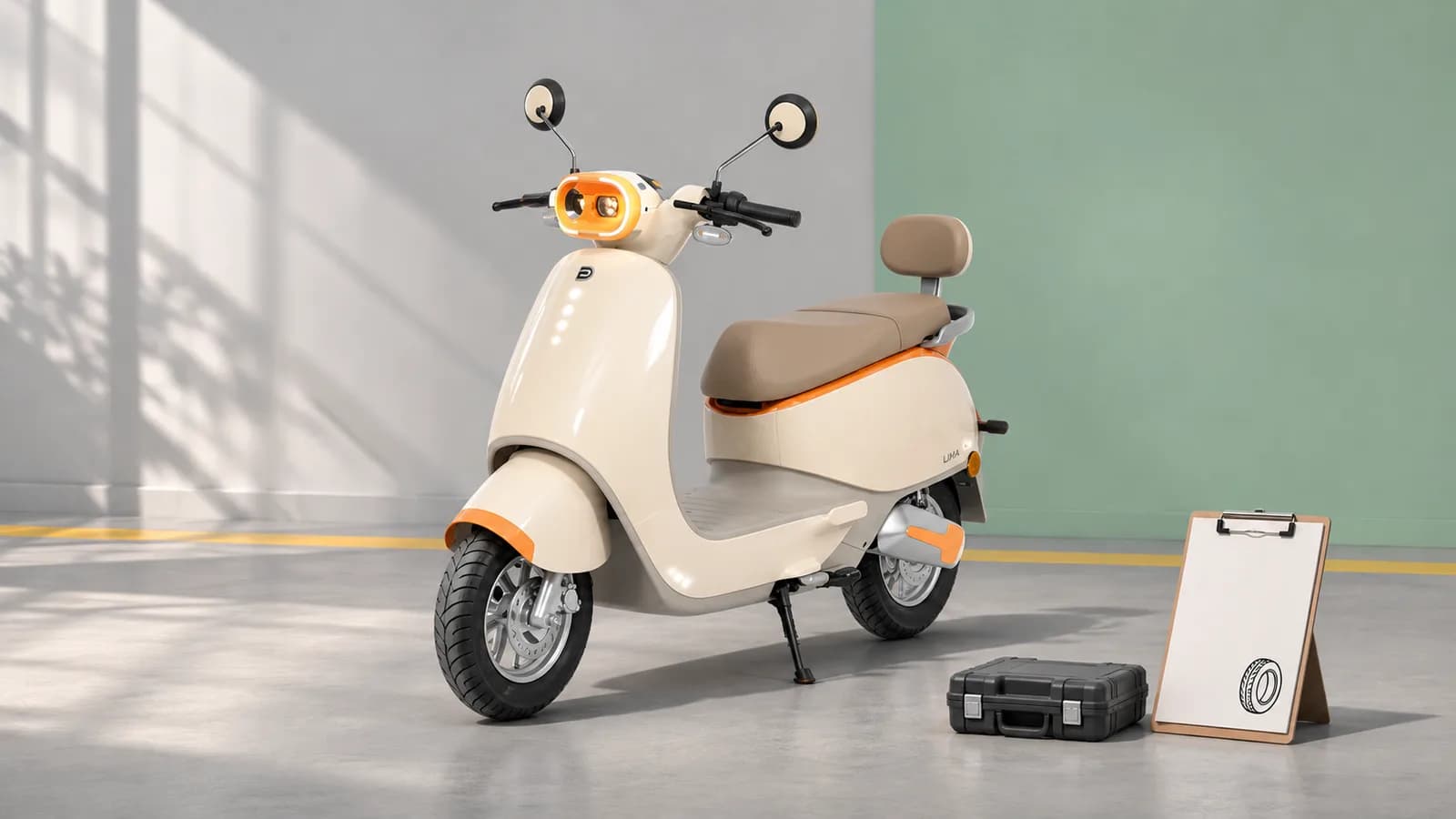
If an electric scooter tyre is flat or appears damaged, stop using the scooter and arrange advice or collection from a suitable workshop. Tell them which wheel is affected, what you observed and the exact scooter model. Do not decide that a tyre is repairable from a photograph or continue riding simply to see whether it will hold air.
This guide is about communicating with a workshop, not removing a wheel, inserting a plug or repairing electrical equipment. It is different from routine pressure checks. Your scooter manual, the fitted tyre manufacturer's current instructions and a qualified inspection take priority. Do not assume that every Dynamo model uses the same tyre construction or wheel arrangement.
What should you do before taking photographs?
Put personal safety ahead of the support message. If you are near traffic or another immediate hazard, get yourself to safety before documenting the vehicle. Do not try to film the tyre while riding, balance a heavy scooter alone or reach around a moving wheel. If the scooter cannot be moved safely, ask an appropriate assistance provider what to do.
When there is a safe place to observe it, note whether the front or rear tyre is affected and whether the concern appeared while parked or during normal use. Do not pull out an embedded object or repeatedly inflate a tyre to demonstrate a leak for a video. Avoid dismantling a wheel or disturbing cables to get a clearer view.
What details help the workshop prepare?
Provide the model name from your purchase documents, not only a close-up of the tyre. If a sidewall marking is already visible from a safe position, a photograph may help the workshop identify the fitted tyre. Ask them to confirm the size and specification instead of ordering a replacement from a similar-looking catalogue picture.
| Information | Useful observation | Leave to inspection |
|---|---|---|
| Vehicle | Exact scooter model from documents | Compatibility of replacement parts |
| Wheel | Front or rear, as observed | What needs disconnecting or removal |
| Tyre | Visible marking or overall photo | Internal damage and repair eligibility |
| History | When you noticed the concern | The technical cause of air loss |
| Location | Safe collection point shared privately | Whether the scooter can be transported as proposed |
Tell the workshop about any earlier repair or sealant only if you know it was used. Say when you do not know. An accurate uncertainty is better than an invented repair history. For a Dynamo vehicle, use the official contact route to ask which support option is appropriate; do not assume that every nearby shop can handle every wheel assembly.
Can the owner decide whether a puncture can be repaired?
Not reliably from the outside alone. Michelin India's motorcycle tyre guidance explains that repairability needs professional assessment, including the condition inside the tyre. Damage location and the tyre's history matter. Temporary external treatments are not a substitute for that assessment.
This general manufacturer guidance does not establish that the tyre fitted to your scooter is a Michelin product, or that any particular repair method is approved for it. Ask the workshop to identify the actual fitted tyre and its applicable policy. This article deliberately provides no universal puncture-size threshold, pressure setting or DIY repair instructions.
What should you agree before the scooter is collected?
Ask who will inspect the vehicle and what collection or diagnostic charges need approval. Tell the provider that it is an electric scooter and describe the problem without declaring it safe to ride. Confirm the collection location privately and ask what should accompany the scooter. Keep keys, purchase paperwork and personal belongings secure.
If a wheel needs removal, ask whether the workshop has the correct procedure and equipment for the exact model. Do not unplug electrical connectors or remove a motor assembly yourself to make collection easier. Also ask whether the tyre work and any separate wheel or electrical concern will be explained and quoted independently.
What should the workshop explain before you approve work?
Request a clear finding and the proposed action: further inspection, repair where permitted, or replacement. Ask what parts and labour are included and whether approval is needed for extra work. A replacement recommendation should identify the intended tyre specification; a photograph of tread alone does not establish compatibility or the complete price.
Keep the acknowledgement and resulting work record in your service file. Ask the workshop what checks were completed and what instructions apply before returning to normal use. If the original concern remains, ask for clarification rather than treating a brief power-on demonstration as the answer to a tyre problem.
How does this fit routine tyre care?
After the immediate issue is resolved, use the routine tyre-care checklist for ordinary observations and manual-led maintenance. If an impact was involved, tell support and use the separate after-fall checklist; do not assume that replacing a tyre resolves every consequence of an incident.
Sources and scope
The linked Michelin India tyre-repair guidance and Dynamo contact and ownership resources were checked on 5 November 2026. The communication table is an organising aid, not an actual customer incident, repair guarantee or warranty decision. No tyre brand, collection service, included accessory or repair entitlement is promised for any Dynamo model.