Ownership
Electric Scooter Tyre Care: An Owner's Checklist
Find the correct pressure reference, record tyre checks and ask the right repair questions without guessing settings for your electric scooter.
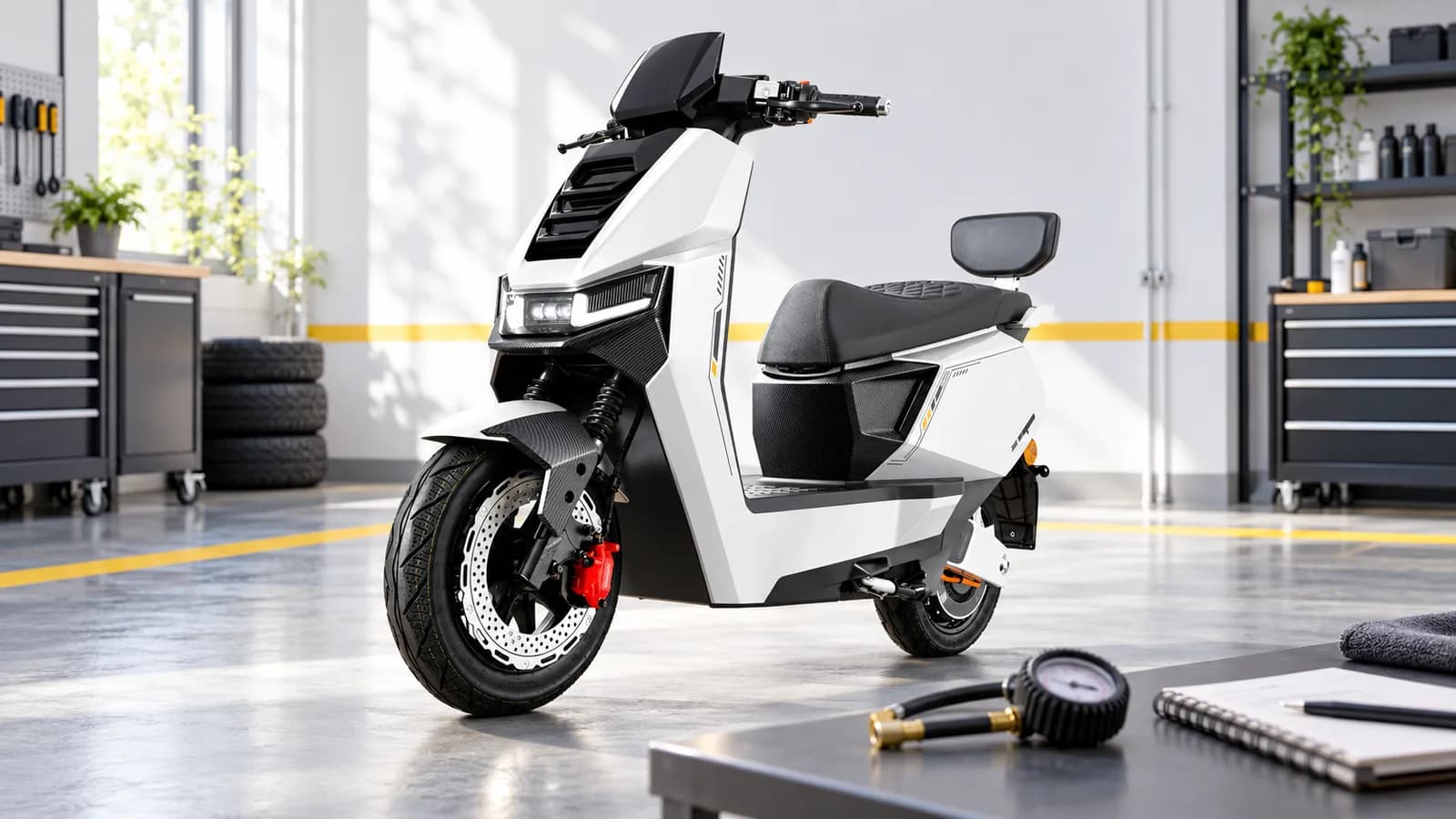
Electric scooter tyre care starts with the pressure specified for your exact vehicle, a check of both tyres and a record of any repeated air loss. Read the owner manual or vehicle label rather than copying a number from another scooter. If a tyre is flat, damaged or repeatedly losing pressure, stop using the scooter and arrange a professional inspection instead of treating another air top-up as a repair.
This Dynamo EV guide explains how to organise those checks and a workshop visit. It does not supply an unverified pressure setting, tyre specification or replacement interval for any Dynamo model. Keep your vehicle documents beside this checklist. For help identifying the correct manual, contact your Dynamo dealer or customer support.
Where can I find the correct tyre pressure?
Use the vehicle manufacturer's instructions for the model and loading condition you actually have. The Michelin India tyre FAQ explains that these instructions concern cold inflation, that front and rear requirements can differ, and that the maximum marking on a tyre is not a substitute for the vehicle's recommended setting. If the manual or label is missing, obtain the information from the vehicle manufacturer.
Create a small reference card with a separate space for each wheel. Add the manual's title or revision so that a workshop can identify the same document. Leave an unanswered field blank; a plausible-looking number from a forum is still not a verified instruction for your scooter.
What should I record at an air check?
A useful record separates the recommended setting from the reading observed. Ask the person checking the tyres to identify which wheel each result belongs to and whether the tyres were cold. Michelin advises checking cold tyres and not releasing air from a hot tyre to force it down to a cold-setting value. Follow the checking interval in your vehicle documents.
| Record field | What belongs here |
|---|---|
| Vehicle | Model and variant from your documents |
| Instruction source | Manual revision or a photograph of the vehicle label |
| Front and rear reference | Separate manufacturer instructions, not a shared guess |
| Observation | Date, wheel checked and measured reading |
| Conditions | Whether the check was made before use or after a journey |
| Follow-up | Any concern reported and the workshop's response |
You do not need a complicated app. A notebook entry or a private phone note works if it is readable when you need it. Avoid keeping the only copy on a paper receipt that may fade or be discarded.
What can I look for without attempting a repair?
Hero MotoCorp's tyre-care guidance identifies cuts, cracking, bulges and excessive wear as concerns to check. Its guidance is for its own vehicles; use it here as a general inspection reference, not as a Dynamo parts specification. If you notice damage or a foreign object, have a qualified workshop assess it. Do not dismantle the wheel, remove embedded objects or carry out a repair to gather evidence.
Describe only what you can observe safely. Record which wheel is affected, where the mark appears and when you first noticed it. A photograph of the visible area can help the workshop prepare for an appointment, but a photograph cannot establish that a tyre is safe to use. The service-support checklist helps you confirm who will handle that inspection.
Why does a tyre that needs repeated top-ups need attention?
A repeated pattern deserves an inspection rather than an assumption about the cause. Tell the workshop the dates of the checks, the affected wheel and whether any work was recently done. Ask it to explain what was inspected, what it found and what action it recommends. Do not declare a puncture, valve fault or wheel problem yourself based only on the appearance of the tyre.
For example, a note saying that the rear wheel needed attention on two separate dates is more useful than a message saying that the scooter has a bad tyre. That example is a record-keeping method, not a diagnostic rule or permission to continue using a tyre with a suspected fault.
What should I ask before approving a puncture repair?
Michelin says a flat tyre needs professional inspection to decide whether repair is appropriate. Ask the workshop to identify the damage and explain its recommendation for the tyre fitted to your vehicle. A generic repair kit label or an online tutorial does not establish that a particular tyre can be repaired safely.
Before authorising chargeable work, request an itemised estimate. Have the workshop distinguish the inspection, any approved repair, a replacement tyre if required, and other labour it proposes. Ask what will happen if inspection changes the estimate. Request your approval before additional work rather than accepting an undefined instruction to do whatever is needed.
How do I check a replacement proposal?
Ask the workshop to match its proposal to the vehicle's documented requirements, not merely to the appearance of the old tyre. Record the proposed manufacturer, product and specification on the estimate, together with the reason for replacement. Where a required detail is unclear, ask the vehicle manufacturer to confirm it before a part is fitted.
Keep the final invoice and job sheet together. They should let you identify the part supplied and the work completed. Ask for any manufacturer instructions supplied with the replacement and how to arrange a follow-up if the original concern returns. Do not assume that every workshop visit, consumable or tyre purchase is covered by the vehicle warranty; check the written terms using the warranty checklist.
A message to send when booking an inspection
I own [model and variant]. I noticed [observation] on the [front or rear] tyre on [date]. My reference is [manual or vehicle label]. Please confirm whether you can inspect this vehicle, how it should be brought to the workshop if it should not be used, the inspection charge and how you will obtain approval before repair or replacement.
Keep personal identifiers and the full invoice in the workshop's private communication channel, not in a public review or social post. Note the appointment confirmation and who will contact you with the findings. If transport is necessary, ask the workshop how to arrange it; this guide does not promise collection or recovery in any city.
Common tyre-care questions
Can I copy another electric scooter's pressure setting?
No. Obtain the setting for your exact vehicle and loading condition from its manual, label or manufacturer. Looking similar is not evidence that two vehicles share instructions.
Does this guide tell me how long a tyre will last?
No fixed lifespan is promised here. Ask the workshop to assess the actual tyre and explain its condition against the relevant manufacturer guidance.
Is a repair estimate the same as a warranty approval?
No. Ask for the chargeable work and any warranty assessment to be explained separately in writing. Keep both records before giving approval.
For model information, browse Dynamo electric scooters. For an existing tyre concern, contact authorised support with the observations above. This is an owner preparation guide, not a repair procedure or an assessment of an individual vehicle.