Ownership
Electric Scooter After a Fall: Before You Restart or Charge
After a fall or impact, prioritise personal safety, avoid restart or charging experiments and arrange authorised inspection using a factual incident record.
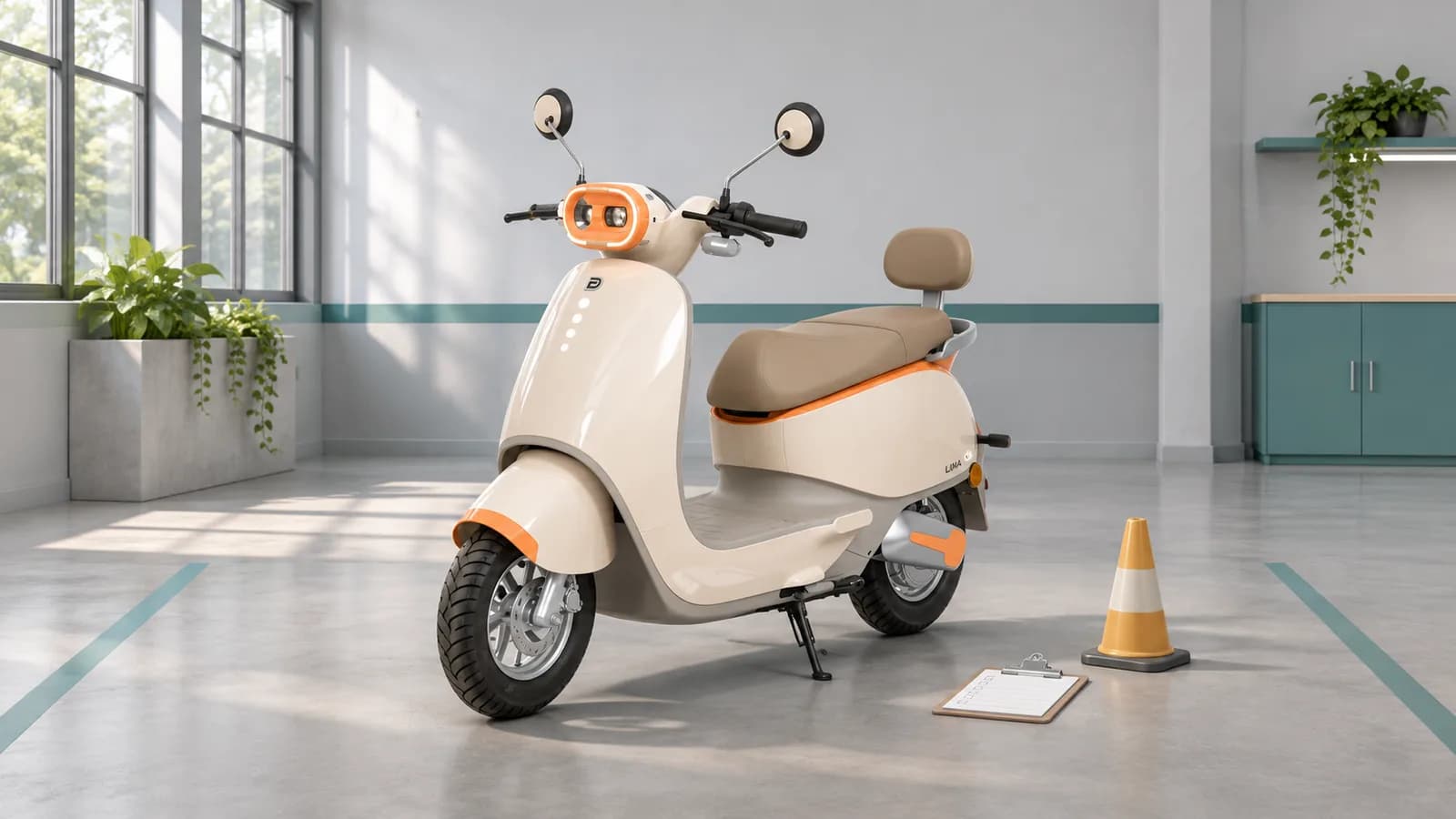
After an electric scooter falls or suffers an impact, do not restart or charge it just to see whether it still works if damage is suspected. First get yourself out of danger, then ask authorised support how the scooter should be assessed and collected. A tidy-looking body panel is not a technical clearance for the battery, steering or brakes.
This is a conservative incident checklist, not a repair procedure or an inspection certificate. The manual for your exact scooter and battery option takes priority. Lithium-ion battery warning signs discussed below apply to that chemistry; do not assume that every battery option has the same construction or handling instructions.
What should happen before taking photographs?
Personal safety comes before the vehicle or a service record. If there is an injury, a dangerous traffic situation, smoke or fire, move away from the danger and contact local emergency services. Do not approach a smoking battery to switch it off, retrieve belongings or get a better photograph. Do not try to fight a battery fire yourself.
When the scene is safe and there are no immediate warning signs, follow the model manual's stopping and shutdown instructions only if it is safe to do so. Do not lift a heavy scooter alone, reach into damaged bodywork or handle a damaged battery. Ask for appropriate assistance rather than creating another hazard while trying to secure the vehicle.
Which battery signs require urgent attention?
London Fire Brigade identifies abnormal heat, deformation, leakage, unusual sounds and chemical odours as possible lithium-ion battery failure signals. Smoke or fire calls for evacuation and emergency help. Do not deliberately touch a battery to test its temperature or put your face near it to investigate a smell. Stop use and charging when damage or a fault is suspected, and seek manufacturer instructions.
These general warnings do not diagnose a Dynamo battery or establish that an impact has made it safe or unsafe. An assessment needs the exact equipment and incident details. The absence of a visible warning is not an owner's battery-health test. Do not open a casing, reconnect a loose cable, charge a removed pack or attempt a repair from an online demonstration.
What information helps authorised support?
Once you can document the event without approaching a hazard, separate observations from assumptions. Say that a side panel has a mark, for example, rather than declaring that the battery is unaffected. Record whether the scooter was parked or in use, the date, the side involved and any warning that appeared. Do not recreate the incident or repeat a journey to collect evidence.
| Record | Useful detail | Avoid |
|---|---|---|
| Incident | Date and a short factual description | Guessing the internal cause |
| Visible condition | Overview and detail photos from a safe position | Removing panels for photographs |
| Display | Existing warning text, if safely available | Repeated restarts to reproduce it |
| Battery option | Information from existing purchase documents | Opening the battery to identify it |
| Collection | Current safe location shared privately with support | Assuming it is safe to ride to a workshop |
For a Dynamo scooter, use the official support contact or complaint form. Ask whether the vehicle should remain unused and what collection arrangement is appropriate. Do not promise a carrier that a damaged battery is ordinary luggage; disclose the situation and follow the provider's instructions.
What should you ask before agreeing to inspection?
Request a service acknowledgement describing the incident and the items being handed over. Ask who will assess the vehicle, what the inspection covers and whether any diagnostic or collection charge needs approval. Tell support about damage to charging equipment as well as the scooter. Keep keys and documents secure during the handover.
Do not infer warranty or insurance coverage from the fact that an inspection is booked. Ask for the applicable written terms and a separate explanation of any proposed repair. Our warranty document checklist helps organise those questions without promising a claim outcome.
When can the scooter return to use?
Ask the authorised workshop to explain the inspection findings, completed work and instructions for the next journey and charging session. A power-on demonstration alone does not explain everything that was inspected. If the original concern remains unresolved, ask for clarification before accepting that the scooter is ready.
Keep the inspection record alongside the maintenance file. For a later follow-up, cite the same ticket and state what changed. The purpose is a traceable service decision, not an owner-declared certificate based on a photograph.
Sources and scope
The battery warning and emergency principles above draw on London Fire Brigade's lithium-ion warning-sign guidance and the National Fire Chiefs Council Charge Safe campaign, checked on 4 November 2026. These are general safety sources from the UK, not Indian vehicle-classification rules, a Dynamo endorsement or a model-specific manual. Use local emergency services in India, not overseas contact numbers.