Ownership
Electric Scooter Cleaning: An Owner's Care Guide
Plan exterior cleaning around your scooter's manual, approved materials and workshop advice, without guessing washing limits or opening sealed parts.
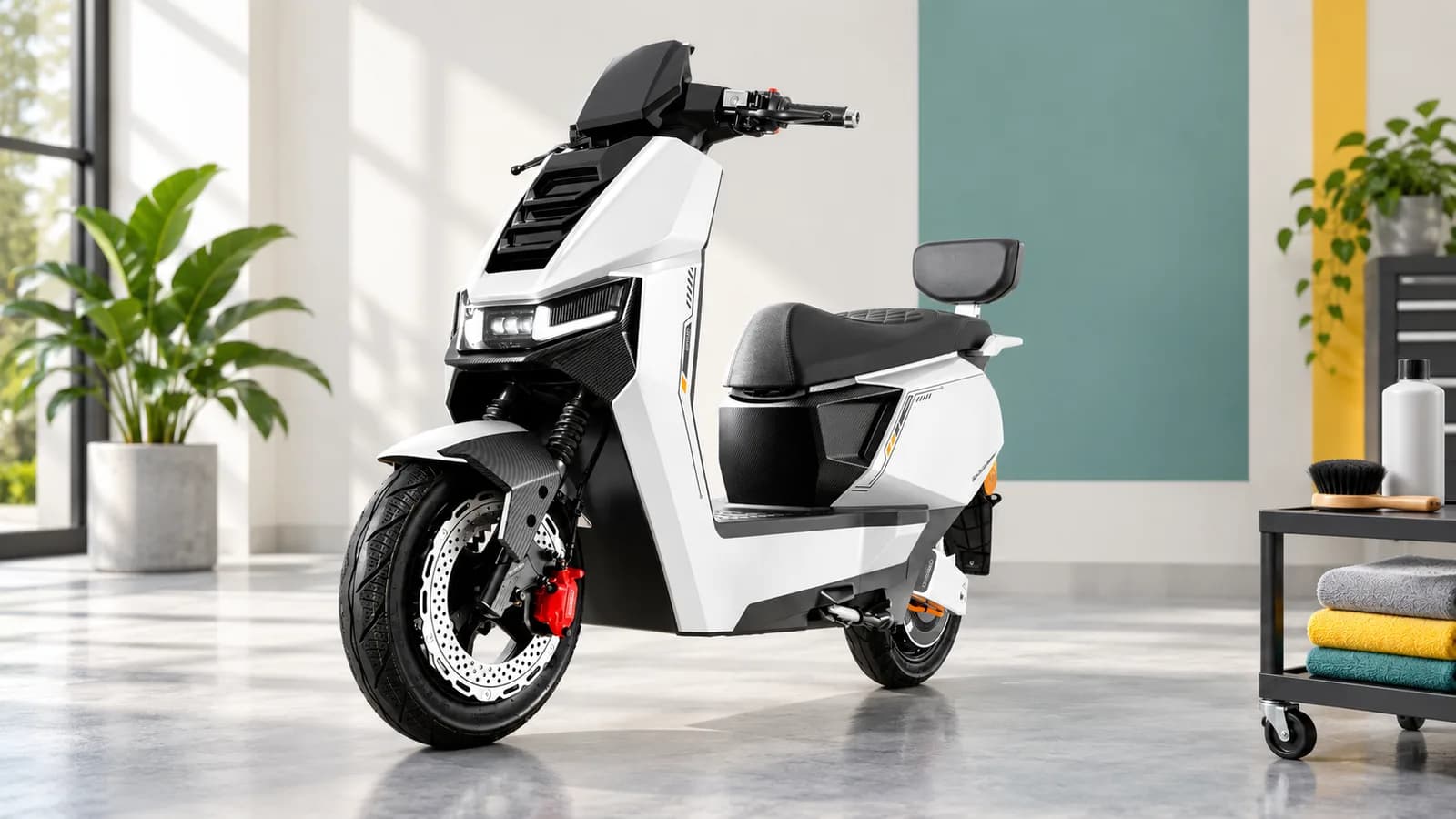
Electric scooter cleaning should follow the instructions for your exact model and its finishes. Confirm the permitted method and cleaning products before starting, and use an authorised workshop when that guidance is missing or the scooter may have damage. A tidy exterior is not proof that electrical parts are dry, a fault has been repaired or the vehicle is ready to use.
This Dynamo EV guide helps owners organise exterior care and a workshop conversation. It is not a substitute for the vehicle manual, a water-resistance certificate or a repair procedure. No washing pressure, immersion limit or product approval is claimed here for a Dynamo model. Ask your dealer to demonstrate the care instructions that apply to the vehicle and battery option on your documents.
Which instructions should I check first?
Find the cleaning and storage sections in the owner manual, together with any separate instructions for the charger, display or fitted accessories. Keep the manual revision or a photograph of the relevant page with your ownership records. If an instruction is unclear, ask the dealer to explain it before you buy a cleaning product or book a wash.
Instructions from another brand can illustrate why model-specific guidance matters, but they do not establish approval for your scooter. For example, TVS's iQube S maintenance article discusses gentle exterior cleaning and avoiding high-pressure water near sensitive components. That advice concerns its own product; it is not a Dynamo washing specification.
Should I clean at home or ask a workshop?
Separate ordinary cosmetic care from a concern that needs inspection. You should not need to open a panel, expose a connector or remove a sealed component to follow an exterior-care instruction. If the work seems to require that, ask authorised support to take over rather than improvising a method.
| Situation | Sensible next step |
|---|---|
| Ordinary exterior dust | Use only the method and materials permitted by the vehicle instructions |
| Unknown cleaner or finish | Confirm compatibility before applying it |
| Dirt around an area the manual excludes | Ask the workshop how it should be handled |
| Loose cover, damaged cable or visible fault | Stop the cleaning plan and arrange inspection |
| Suspected water entry | Do not power or charge the scooter just to test it; seek support |
| Unclear washing instructions | Request a model-specific demonstration or workshop service |
Tell the workshop which outcome you need. Removing a cosmetic mark and investigating a warning are separate jobs. Ask for them to be recorded separately so a wash is not mistaken for a completed fault assessment.
What belongs in a small exterior-care kit?
Begin with the manual's permitted items, not a large collection of automotive chemicals. Keep cloths clean and identify any product by its full name and instructions. A bottle described merely as vehicle polish or all-purpose cleaner is not evidence that it suits every panel, coating or display. Ask the dealer about the actual surface you intend to clean.
Keep care products in their labelled containers, away from children and away from charging equipment. Follow the product's own handling instructions as well as the vehicle guidance. Do not mix cleaners, transfer an unknown liquid into an unmarked bottle or use the appearance of our conceptual cover image as a product recommendation. The bottle in the illustration does not represent an approved consumable.
How do I organise cleaning without missing a concern?
Choose an appropriate parking position and prepare the vehicle exactly as its instructions require, including any power-off and charging-disconnection steps. Do not begin while charging. Have the relevant instructions available and ask support about any step you cannot follow confidently. Do not use this article to decide which covers or components may be removed.
A short observation note before cleaning is useful: identify an existing mark, loose item or other concern so it is not confused with the result of the cleaning. Take photographs only where the vehicle is safely parked. Then stay within the permitted exterior-care method. Do not use an internet wash demonstration to justify spraying a charging port, forcing water into a gap or dismantling a part.
Are the display, body panels and wheels one cleaning job?
Treat the finish and instructions for each area separately. Ask whether the permitted cloth, cleaner and method differ for the display, painted panels, seat and wheels. Do not assume that a product suitable for one surface is suitable for another, or that making a surface shinier makes it better maintained.
Brakes, tyres and electrical parts are not places to experiment with polishing products or lubricants. Ask a qualified workshop how to handle contamination or a mark in those areas. Our tyre-care checklist explains the observations to report; it does not authorise tyre or brake repairs. Keep cosmetic work separate from component maintenance.
What should a wash provider confirm?
Ask whether the provider can follow your model's documented restrictions and who will deal with a concern noticed before or after the visit. Avoid a service that relies only on a general statement that every electric scooter can be washed in the same way.
The TVS iQube FAQ gives its own exclusions for directed water and recommends its authorised workshop. The useful point for a Dynamo owner is to request an equally clear answer for the actual model, not to copy those exclusions as a complete Dynamo procedure. Confirm any charge before work begins and ask for a receipt describing what was done.
What if I notice a warning or suspect water exposure?
Do not keep switching the vehicle on or connect a charger to find out whether the concern disappears. Stop using it and contact authorised support for the appropriate next step. Do not open the battery casing, charger or sealed electrical areas, and do not attempt drying or electrical repair based on a general cleaning guide.
Record the model, when the concern appeared and what happened immediately beforehand. Give support a factual description rather than a diagnosis. If collection or transport is needed, ask how to arrange it; availability and charges must be confirmed directly. The service-support guide helps you identify the right workshop contact, while the monsoon-care guide covers weather-related preparation.
A brief request you can send before a cleaning visit
Please confirm the exterior-cleaning method and products permitted for [model and variant], including any areas that must not be sprayed or treated. I have noticed [observation] and would like it recorded before work. Please explain whether this needs a separate inspection, the agreed charge and who I should contact if there is a concern afterwards.
Keep the reply with the receipt. If the provider cannot identify the relevant instructions, postpone the wash until your dealer can clarify them. It is better to leave a cosmetic mark unresolved than to substitute guesswork for a vehicle-care procedure.
Common cleaning questions
Does a water-resistance claim mean any washing method is acceptable?
No such inference is made here. Follow the manufacturer's cleaning instructions for the exact vehicle; do not translate a general weather claim into permission for a particular washing method.
Can I use a cleaning product because another scooter owner recommends it?
A recommendation is not model or material approval. Check the product instructions and obtain confirmation for the surface on your own vehicle.
Does a cleaning receipt establish warranty cover?
No. Keep the receipt, but read the actual warranty terms and ask how a concern is assessed. See the warranty checklist for the documents to retain.
For a Dynamo-specific care question, use customer support. Keep the model and manual details ready so the response can address the scooter you actually own.