Ownership
Electric Scooter Mirrors: Check Your View Before a Test Ride
Assess mirror condition and your seated view while safely stationary, and resolve mounting or compatibility concerns with the showroom before riding.
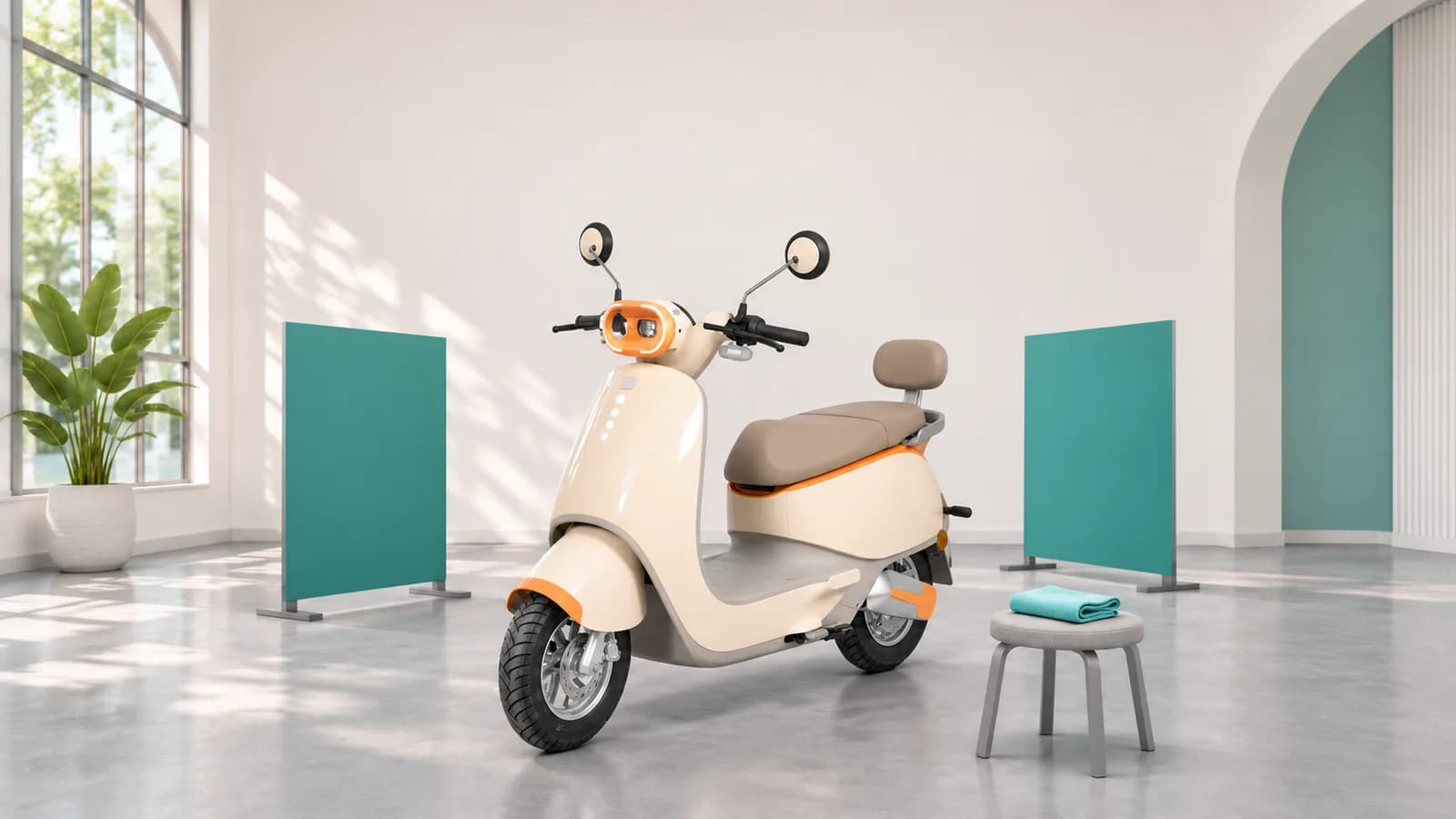
Check mirror visibility while the scooter is safely stationary, with showroom staff helping you follow the correct model instructions. Sit in your normal riding position and assess what you can see behind and beside you through each mirror. If the position cannot be made usable, or a mirror is loose or damaged, resolve that concern with the workshop before starting a test ride. Do not attempt an adjustment while riding.
This is a stationary fit-and-visibility checklist, not a fitting procedure or a substitute for rider training. It does not prescribe mirror angles, fastener settings, replacement parts or legal requirements for a particular model.
Start with the actual scooter you intend to try
A photograph of a mirror cannot tell you whether it provides a useful view from your riding position. Ask the showroom to identify the scooter variant and whether the mirrors fitted to it are the specified equipment. If the display scooter differs from the one you are considering, make that difference part of the conversation.
The owner-manual version guide explains why a model name alone may not identify the correct instructions. Use the appropriate manual or an authorised explanation for the actual adjustment points. Do not assume a stalk, housing or mounting arrangement works like one on another scooter.
The Motorcycle Safety Foundation's T-CLOCS pre-ride inspection checklist includes mirror condition, cleanliness, mounting and adjustment while seated. Its guidance is a general training reference, not a Dynamo adjustment specification or a statement of Indian model-specific rules. Ask staff to explain which checks are appropriate for the scooter in front of you.
Set up a safe stationary check
Ask staff to position and stabilise the scooter using the procedure appropriate to the model. Confirm how to keep its drive system inactive during the check. Do not improvise a support arrangement, balance the scooter alone for a photograph or operate unfamiliar controls to see what happens.
Use the seating position you expect to use, without leaning to obtain an artificially clear reflection. Bring the jacket or other normal riding clothing that could affect the view. The purpose is to assess your ordinary position, not to make the reflection look good for someone standing beside the scooter.
Where you need help getting on or off, explain that before beginning. Keep this separate from the moving portion of the test-ride checklist. A stationary concern should not be left for you to discover in traffic.
Review each mirror separately
Look into the left and right mirrors from the same seated position. Ask whether the view lets you observe the area behind and alongside you, rather than mainly reflecting your clothing or the showroom wall. An edge of your arm in a reflection is not, on its own, a diagnosis of a faulty mirror. The useful question is whether the overall view is appropriate and can be achieved without an awkward posture.
Do not treat an apparent lack of obstacles in the reflection as proof that the area is clear. Mirrors do not remove every blind spot. Obtain proper training on observation and manoeuvring rather than treating this showroom exercise as a complete riding lesson.
| What you notice | What to ask staff | What not to assume |
|---|---|---|
| Mostly clothing in the reflection | Can the specified mirrors provide a useful view from my normal posture? | That every rider needs the same angle |
| One side seems difficult to see | Is the fitted equipment correct and properly positioned? | That a matching-looking replacement will solve it |
| Housing will not remain in position | Can the workshop inspect the mounting and adjustment mechanism? | That tightening an unknown fastener is an owner adjustment |
| Cracked, loose or unclear mirror | Should it be repaired or replaced before the test ride? | That a short ride makes the concern unimportant |
| View changes with a different rider | Can each rider establish their own setup while stationary? | That the previous rider's position is suitable for everyone |
Let the workshop handle mounting or compatibility questions
If a normal documented adjustment does not resolve the concern, ask the workshop to inspect it. Do not force a housing beyond its intended movement, loosen unfamiliar hardware or fit a universal extension to experiment. A component that looks similar may have a different mounting arrangement.
Before buying a replacement, identify the approved part and fitting process through the spare-part enquiry checklist. Ask how the proposed change affects clearance and the view from your actual seating position. Do not rely on a generic product photograph as compatibility approval.
Keep repair and cosmetic questions separate. A scratched finish and a mirror that cannot remain securely positioned are different observations. Describe what you can actually see or feel rather than naming an unconfirmed mechanical cause.
Recheck after collection or a change of rider
At handover, repeat the stationary check on the delivered scooter. A showroom demonstration on a different vehicle does not establish the setup of the one you collect. Ask staff to demonstrate the correct owner-adjustable controls and explain what should instead be referred to a workshop.
If a mirror has been knocked while parked, report any looseness, damage or change in its ability to hold position before riding. Follow the separate after-impact checklist where the scooter has fallen or suffered an impact; restoring a mirror's appearance does not confirm the rest of the vehicle is sound.
For model-specific support, use Dynamo's official contact channel. Describe the variant, the side affected and the stationary observation. Share any requested photograph privately without exposing your address or complete vehicle identifiers.
Frequently asked questions
Can I copy the mirror position from a showroom photograph?
No. Check the actual view from your own normal seated position, using the correct fitted equipment and model instructions.
Should I adjust a mirror during the test ride if the view feels wrong?
Do not adjust it while riding. Stop the activity safely and ask the showroom or instructor to resolve the concern before continuing.
Does this checklist approve a replacement or mirror extender?
No. Compatibility and mounting decisions need the exact model and part information, followed by an appropriate fitting and visibility check.