Owner Care
Damaged Scooter Charging Lead? Pause Use and Arrange Qualified Help
Pause use of suspect charging equipment, avoid improvised electrical tests and arrange a model-specific assessment through a qualified support route.
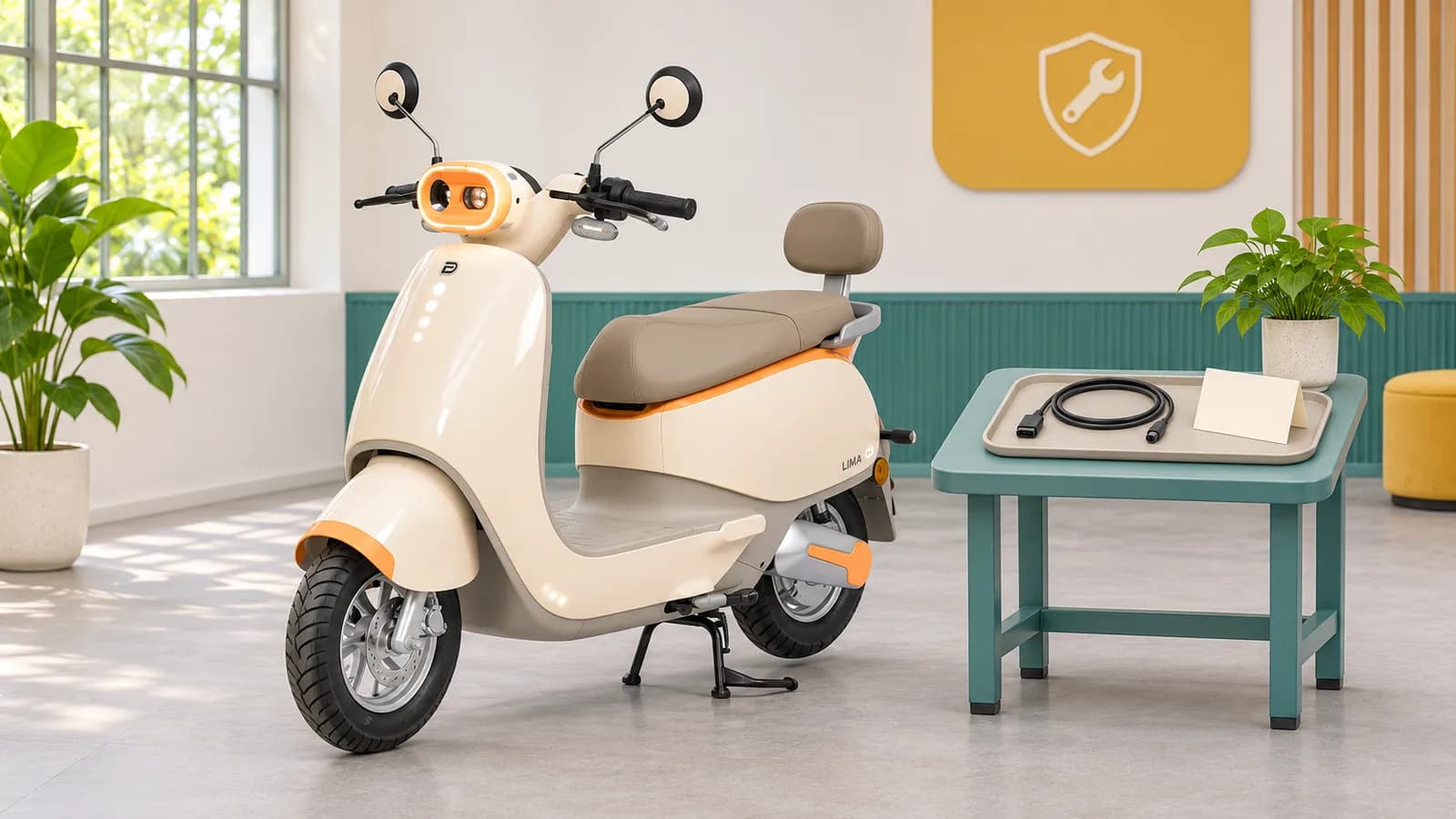
Do not continue using a scooter charging lead that appears damaged, has exposed conductors, shows scorching or has an unexplained change at a plug or connector. Pause charging and ask the equipment manufacturer or a qualified professional how to proceed. Do not test whether it still works, cover a concern with tape or substitute a lead simply because a connector seems to fit.
This is an observation and support guide, not a repair procedure. It does not identify a particular Dynamo charging assembly, authorise an electrical alteration or establish the condition of a household circuit.
Do not approach a developing emergency to collect evidence
If there is smoke, unusual heat, a burning smell or another immediate danger, do not approach, handle or move equipment to take photographs or investigate. Move to safety, alert others as appropriate and contact the relevant emergency services. Do not attempt to fight an electrical or battery fire or carry suspect equipment through a building.
If there is no immediate danger, ask a qualified person how to make the equipment safe. Do not touch damaged connectors or attempt to isolate wiring yourself. Any ordinary external observation should be limited to equipment that has already been safely disconnected and is cool, without opening housings or exposing electrical parts.
Describe the part rather than guessing the fault
The charging arrangement may include a supply lead, charger, connection to the vehicle or battery, and fixed household electrical equipment. Identify which item concerns you without disconnecting internal or unfamiliar components to prove your theory.
For example, distinguish an observation at a removable lead from an issue with a fixed socket. A problem that appears at a socket may need an electrician's assessment as well as product support. Do not assume that replacing one portable item resolves the condition of everything connected to it.
The UK's Health and Safety Executive electrical-safety introduction advises removing suspect equipment from use for damaged connectors, taped or insecure cables, exposed wires and burn marks, and reserving repairs for competent people. This is a general safety reference, not a statement of the legal requirements for an Indian property or a model-specific repair instruction.
Avoid improvised fixes and repeated tests
Do not keep reconnecting equipment to see whether an intermittent concern returns. Do not press a lead into a different position, conceal damage with tape, join wires, open a charger or replace a fuse to test an explanation. A device continuing to operate is not evidence that it is safe.
Avoid moving the same suspect equipment to a neighbour's socket as a comparison test. Report the observation and arrange an assessment instead. Do not rely on the absence of a warning message or a successful earlier charge as clearance to continue.
Make a focused support request
Use a verified manufacturer, retailer or service route. The official Dynamo contact page is a starting point for identifying the appropriate product support channel; it is not permission to send damaged equipment without instructions.
| Record | Useful information to give privately |
|---|---|
| Equipment | Exact scooter and charger identity from available documents |
| Location | Whether the concern is on a lead, connector, charger housing or fixed socket |
| Observation | Visible condition and any event already observed, without repeating a test |
| History | When first noticed and any known movement, damage or prior work |
| Assistance | Who will assess it, what should remain out of use and whether collection is appropriate |
Take a photograph only if the item is already safe to approach and no handling or disassembly is needed. Do not delay an emergency response to document it. Keep private identifiers and addresses out of public posts.
Verify the proposed next step
Ask whether the manufacturer requires replacement of the full assembly or provides an approved service route for the exact product. Do not select a generic cable by appearance, connector shape or an online seller's compatibility claim.
The National Fire Chiefs Council's Charge Safe guidance advises using manufacturer-supplied or recommended charging equipment and avoiding electrical-system modifications. Its UK-specific markings and local requirements are not evidence of a Dynamo product's approval or of requirements in India.
The replacement-charger checklist helps structure product questions. It does not authorise a replacement lead or determine whether a fixed installation is suitable.
Keep the assessment and return-to-use decision clear
Ask the provider to describe what it checked, what work or replacement was agreed and any remaining restrictions. Keep that response with the service record. A collected item or received enquiry is not a completed repair.
Only resume use in accordance with the relevant manufacturer's instructions and the qualified provider's findings. Do not restart charging to meet a commute deadline while an unresolved concern remains. The fault-report guide can organise the facts; it cannot diagnose the equipment or guarantee an outcome.