Rider Equipment
Electric Scooter Helmet Visor Care: Follow the Exact Shield Instructions
Identify the exact visor and any insert, follow the maker's care instructions, and distinguish a cleaning question from damage needing assessment.
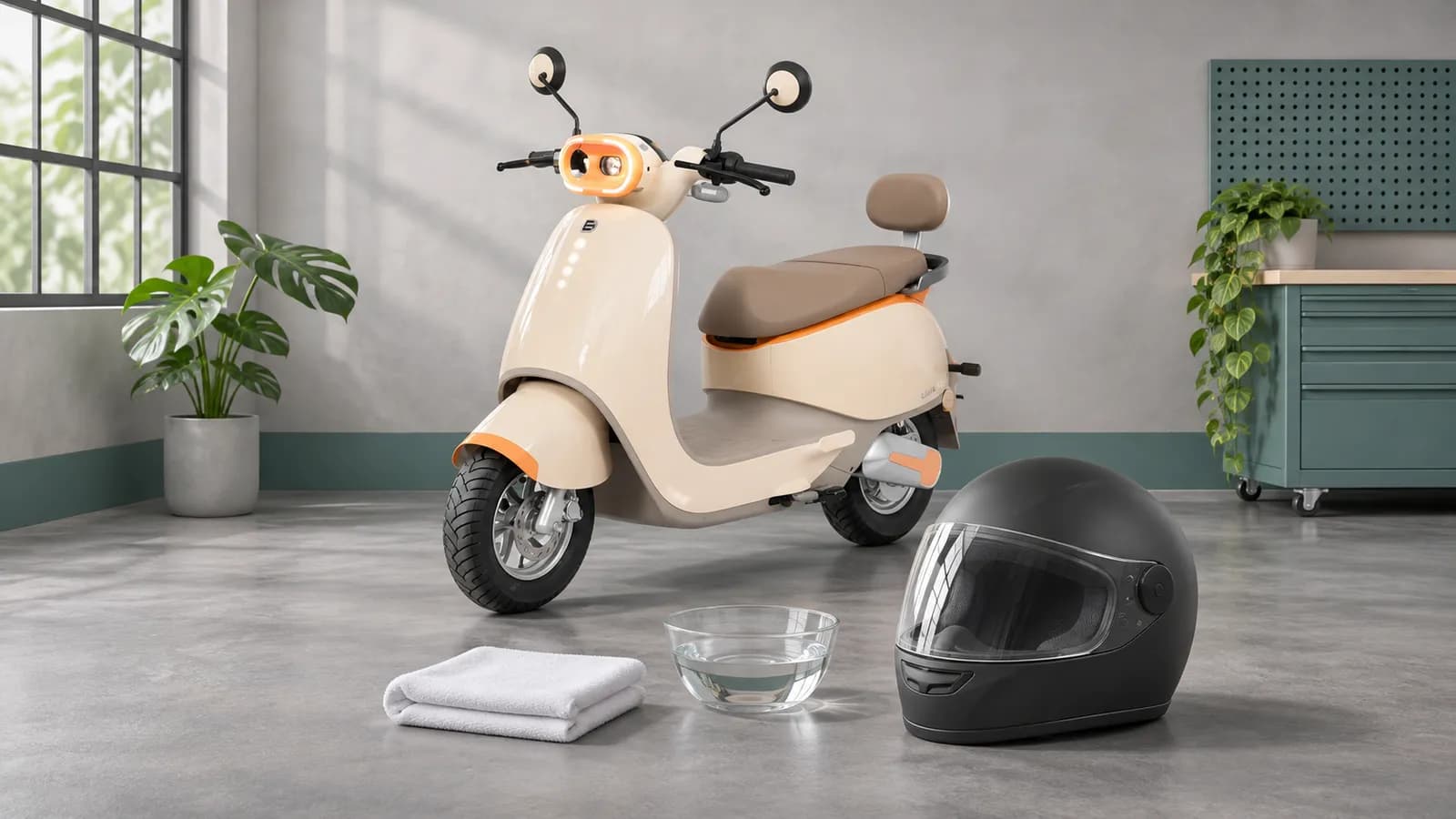
For helmet visor care, identify the helmet, shield and any fitted insert before choosing a cleaning method. Follow the relevant manufacturer's instructions, and stop using a visor that prevents a clear view until the problem has been resolved. A scratched surface, a removable deposit and a damaged coating are different problems; applying a stronger cleaner does not establish which one you have.
This guide helps organise an owner-care decision. It does not certify a helmet, recommend a visor brand or provide a universal cleaning recipe. The helmet and care objects in the cover are conceptual illustrations, not equipment included with a Dynamo scooter.
Which instructions apply to my visor?
Start with the actual helmet model and the identification supplied for its visor. Check whether there is a separate inner sun shield, a fitted anti-fog insert or a special surface treatment. Find the corresponding instruction document through the manufacturer or ask an authorised retailer to identify it. Keep that document with the purchase information.
SHOEI's CNS-2 shield instructions illustrate why identification matters: they distinguish ordinary shield cleaning from the care of mirrored shields and warn against specified unsuitable cleaning materials. Those instructions concern the named SHOEI part; they are not approval to apply the same process to every visor.
If the helmet is yours but its documents are missing, photograph accessible identification for a private enquiry. Do not dismantle the helmet to search for hidden markings. Our helmet buying and verification guide covers product identity and purchase records separately from this care question.
What should I do before reaching for a cleaner?
Put the helmet somewhere stable and review the maker's care directions first. Identify which surface you intend to clean. A bottle intended for a helmet shell, spectacle lens or household window should not be assumed suitable for a coated visor or insert.
Before beginning, resolve these four questions:
| Question | Useful answer to obtain |
|---|---|
| Which item needs attention? | Outer shield, inner surface, sun shield or separate insert |
| Which instructions cover it? | Exact part or helmet care document |
| Which materials are permitted? | Maker-approved cleaning method and materials |
| What happens if the view stays affected? | Retailer assessment or the specified replacement route |
This table is a preparation aid, not permission to remove parts or experiment with cleaning products. If two documents appear inconsistent, send the exact product details to support rather than combining their methods.
Is a scratch something I should polish out?
Do not improvise polishing, sanding, solvent treatment or coating removal to restore a questionable visor. Ask the manufacturer or qualified retailer to distinguish contamination from damage and advise on the correct replacement if necessary. Keep the item out of use when you cannot see clearly through it.
Arai's shield-care guidance explains that abrasive cleaning can damage its shield coating and cautions against products not intended for the material. The relevant lesson is to check the actual maker's restrictions, not to assume that all plastic surfaces tolerate the same treatment. A photograph alone is not our assessment that your visor can safely remain in service.
What if there is a separate anti-fog insert?
Treat the insert as a separately identified component. Ask for its own care and fitting instructions, including whether any removal is an owner task. Do not assume the outer visor's method applies to the insert or try an unrelated spray because another rider reports success with it.
If an insert no longer sits as intended, the mechanism feels wrong or visibility remains affected, stop and request help. Do not turn the care check into a trial ride to determine whether an unclear view is tolerable. A parked inspection cannot establish how an unresolved visibility problem will behave in use.
What should I ask when buying a replacement?
Request the exact replacement identity for the helmet model, the applicable fitting instructions and the conditions of use. Confirm what is being supplied before paying. A similar-looking attachment or colour is not a compatibility check, and a clear-looking photograph does not establish that a part is genuine or suitable.
Keep the retailer's answer and invoice, and have the fitting checked as the maker directs. If damage followed an impact, ask about the helmet as a whole rather than replacing only the visually affected part. The accessory checklist can help separate product identification from an unsupported suitability claim.
For a planned Dynamo dealer visit, resolve rider-equipment questions before the demonstration. Record the helmet model, visor identity, issue observed and the maker's response. A short, accurate care record is more useful than repeatedly trying products on an unidentified surface.