Buying Guide
Buying a Used Electric Scooter: Check the Vehicle, Not Just the Asking Price
Ask about vehicle identity, service history, charging equipment and warranty transfer before a used-scooter purchase, with space to record unresolved questions.
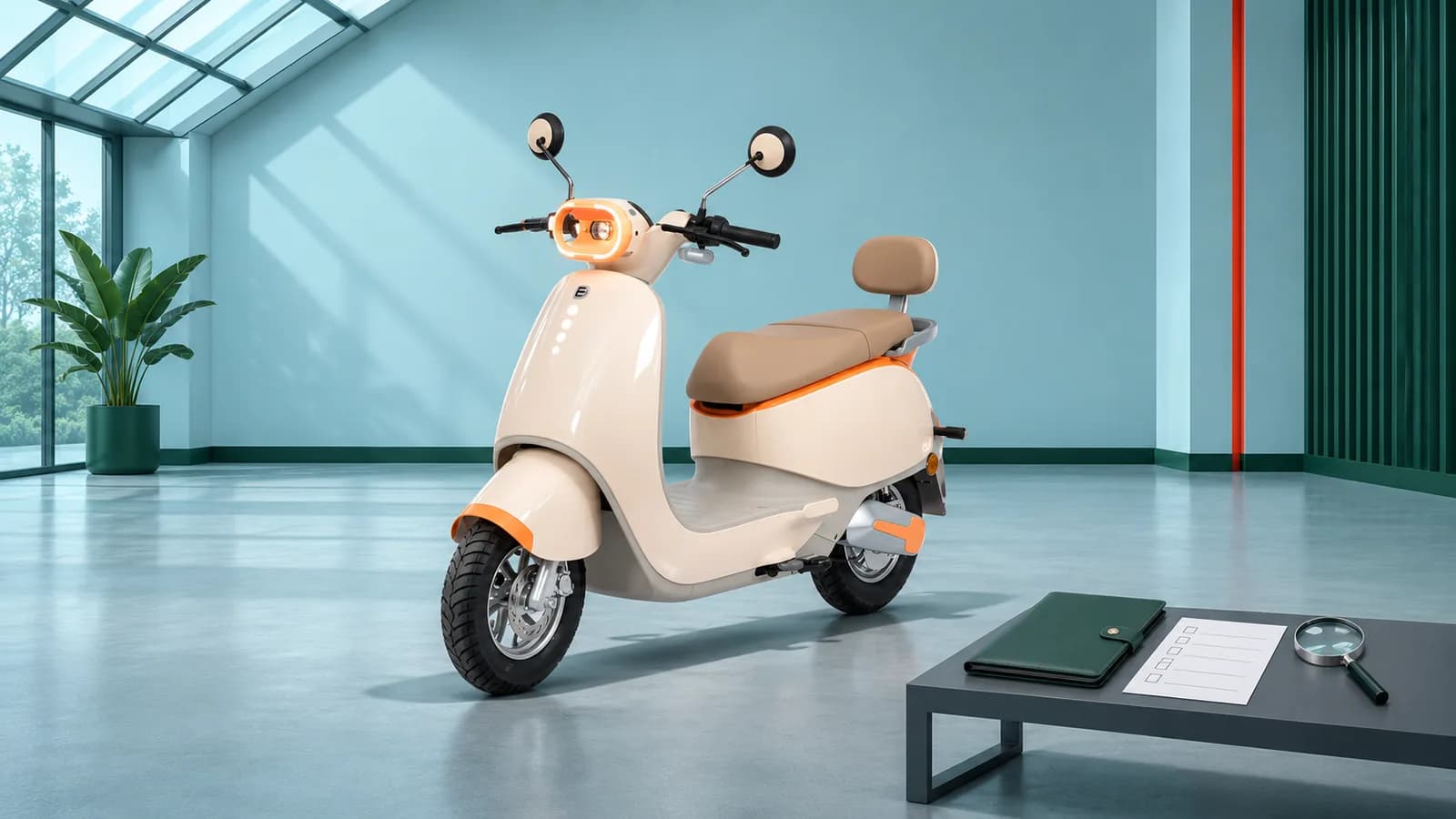
Before buying a used electric scooter, match the actual vehicle to the seller's documents, obtain a suitable independent inspection and confirm how battery, charger and after-sales support questions will be handled. A low asking price or a short demonstration cannot establish battery condition, ownership history or transferable warranty. If important facts cannot be verified, pause the purchase rather than assuming the risk is included in a bargain.
This guide is for planning questions, not remotely diagnosing a vehicle or confirming a legal transfer. Requirements depend on the actual vehicle and applicable rules. It does not assume that every scooter has the same documentation or that any registration, insurance or ownership-transfer requirement can be ignored.
What should match before you discuss a payment?
Ask the seller to identify the exact model and configuration and show the documents they actually hold. Compare the vehicle identification information with those records through a safe, appropriate process. A brand name on a body panel or an online advertisement is not a complete identification check. Do not copy another owner's documents as a substitute.
Ask who is selling the scooter and what supports their right to sell it. Where finance, a previous owner or missing paperwork is mentioned, get the issue resolved through the appropriate official route before payment. Do not post identity documents in public comments or send them to an unverified intermediary. Obtain individual professional advice if ownership or transfer is unclear.
What history should the seller disclose?
Request the service records and ask about known battery replacements, charging equipment changes, major repairs and water or impact damage. A useful answer names the work and the document supporting it. An assertion that nothing has happened is not equivalent to an inspection, and a missing record should remain an uncertainty in your decision.
| Question | Evidence worth requesting | Uncertainty that remains |
|---|---|---|
| Which vehicle is offered? | Matching model and identification records | Undocumented changes |
| What work was done? | Dated job cards or invoices | Work without records |
| Was the battery changed? | Exact replacement reference and invoice | Present condition without assessment |
| Which charger is included? | Its reference and compatibility confirmation | Safety from appearance alone |
| Is any warranty left? | Written response for this vehicle and transaction | Transferability until confirmed |
You can use a copy of the table during a viewing without treating it as an inspection certificate. Record an unanswered question as unanswered; do not convert a seller's silence into an approval.
Why does a short demonstration leave questions open?
A scooter powering on does not describe its full history or settle every concern about its condition. Arrange an assessment by a suitable professional with the seller's permission. Ask what that assessment includes, what cannot be checked and how findings will be documented before agreeing that it is sufficient for your decision.
Do not ask the seller to run the battery flat, open its housing or bypass a protective function to prove a claim. Do not perform electrical tests based on a social-media video. If the viewing raises a concern, the next step is clarification or professional assessment, not a more aggressive demonstration.
How should you check the supplied charger?
Ask for the charger that belongs to the identified vehicle and get manufacturer confirmation before using a substitute. The US Consumer Product Safety Commission's charger guidance warns that chargers marketed as universal can be incompatible with particular micromobility batteries. That warning does not establish a fault in the scooter you are viewing; it explains why compatibility needs confirmation.
This is separate from negotiating a replacement cost. A cheaper alternative is not necessarily an approved one. The replacement charger checklist explains what to ask; it is not permission to select equipment from a photograph of the connector.
Does the original warranty automatically transfer?
Do not assume that it does. Read the actual terms and ask the responsible provider about this particular vehicle, ownership change and remaining coverage. Keep the written response. A warranty booklet, original invoice and seller's promise answer different questions; none should be relabelled as confirmed transfer approval.
For a pre-owned Dynamo scooter, ask through the official contact route, identifying the model and the records available. Use the warranty questions guide to structure the enquiry. No transferable cover, included inspection, buy-back service or used-stock availability is promised here.
What belongs in the final decision record?
Keep the agreed item list, identification details, disclosed issues, inspection findings and payment acknowledgement together. Confirm what is included before paying: keys, charging equipment and the documents actually available. Ask for suitable advice where an official transfer is required. Keep a copy of the original advertisement, but do not rely on it over a contradictory written agreement.
Compare the total commitment with a new-scooter written quotation where useful. The right decision may be to buy, ask more questions or walk away. This guide does not give a fixed resale value or claim that any brand is always the better used purchase.
Sources and scope
Prepared on 6 November 2026. The linked CPSC guidance is US safety information, not an Indian legal-transfer policy. Dynamo links provide routes for model-specific enquiries rather than promises about a used vehicle. This is an original buyer-question guide, not a customer review, vehicle inspection or verified used-scooter offer.