Battery guides
Lithium-Ion vs Lead-Graphene Scooter Batteries
Compare the exact battery option, charger, rated energy and written warranty rather than choosing an electric scooter from a battery marketing label alone.
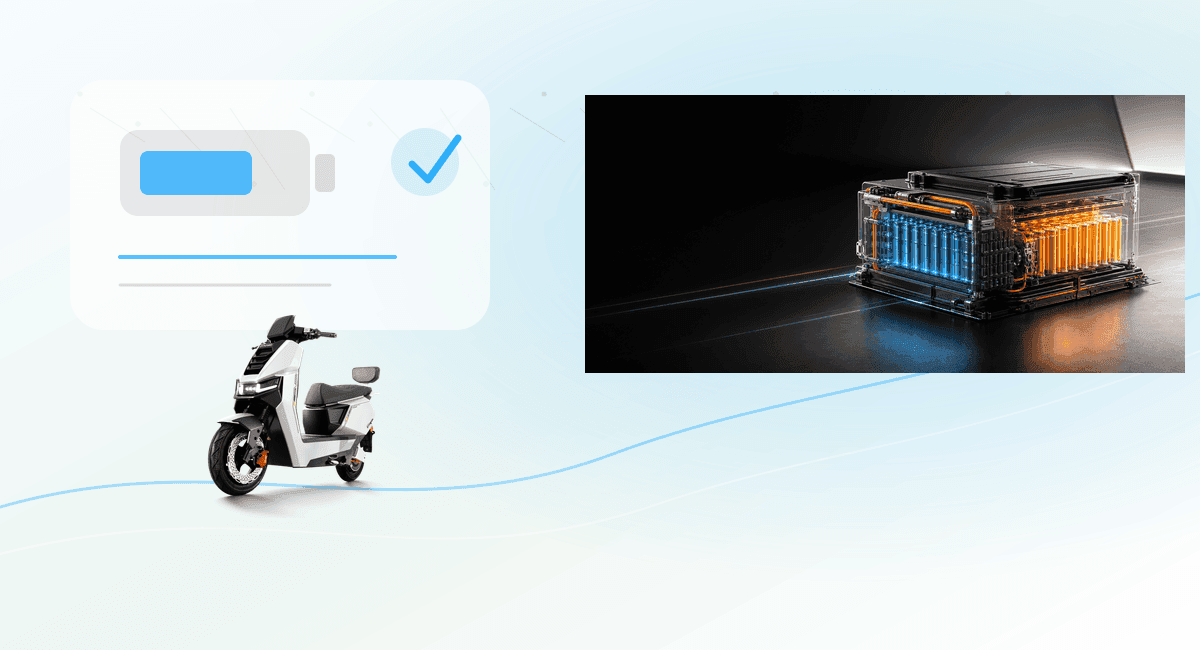
When comparing lithium-ion and lead-graphene scooter options, ask for the exact battery specification, approved charger and written warranty. A chemistry or marketing label alone does not establish range, charging time, replacement cost or suitability for your route. Compare the complete vehicle-and-battery combination being quoted.
This guide does not claim that every battery sold under either label has identical construction or performance. It is a document checklist, not a laboratory test or a recommendation to replace one battery type with another.
Identify the battery on the quotation
Ask the dealer to write down the battery manufacturer or part reference where provided, rated voltage, capacity and the scooter variant it belongs to. Match the quotation to the label and manual supplied with the vehicle. If the label and sales description differ, resolve the difference before delivery.
Do not assume two scooters with the same body have the same battery equipment. Also ask whether the battery is intended to remain installed during charging. Removal, lifting and handling must follow the particular manufacturer's instructions, not a generic online demonstration.
| Comparison item | Evidence to request |
|---|---|
| Rated energy | Battery data sheet for the quoted variant |
| Charger | Approved model and electrical requirements |
| Range statement | Vehicle variant and test conditions |
| Warranty | Coverage, limits, exclusions and claim process |
| Replacement | Current written quote and what it includes |
| End of life | Authorised collection or service instructions |
Read capacity units carefully
Voltage and ampere-hours are not competing measurements. Where both refer to the same rated battery, multiplying volts by ampere-hours gives nominal watt-hours; dividing by 1,000 gives nominal kilowatt-hours. That arithmetic is not a measurement of usable road energy or electricity drawn at the socket.
For example, a hypothetical 60 V, 30 Ah rating represents 1,800 Wh, or 1.8 kWh, nominally. These numbers do not describe a Dynamo model. They do not establish how far a vehicle travels or what one charge costs. Use actual specifications and the meter-based charging method for those questions.
Compare your routine, not a universal winner
Tell the dealer how far you ride, when charging is possible and where the scooter is parked. Ask how each offered variant fits that routine. Request a demonstration of any handling task you will need to perform, without opening the battery casing or changing connectors.
A lower initial quotation should be considered alongside the exact warranty, service arrangements and a current replacement quote. Avoid accepting a fixed lifetime or future resale promise unless it is part of an enforceable written offer you understand.
Keep charging and servicing matched to the equipment
Use only equipment approved for the specific vehicle and battery. Do not swap chargers because the connector appears to fit, bypass a protection system or attempt a chemistry conversion yourself. Ask authorised service about a replacement and any effect on vehicle approval and warranty.
For charging guidance, start with the vehicle manual and the BEE EV information hub. For disposal or damaged batteries, request the manufacturer's authorised collection instructions rather than putting batteries in household waste.
Questions to take to a Dynamo dealer
Review the currently listed Dynamo models, then confirm the battery option locally. Bring the warranty checklist and your route notes. Choose after the specifications, equipment and support are clear; the battery name is the beginning of the comparison, not its conclusion.